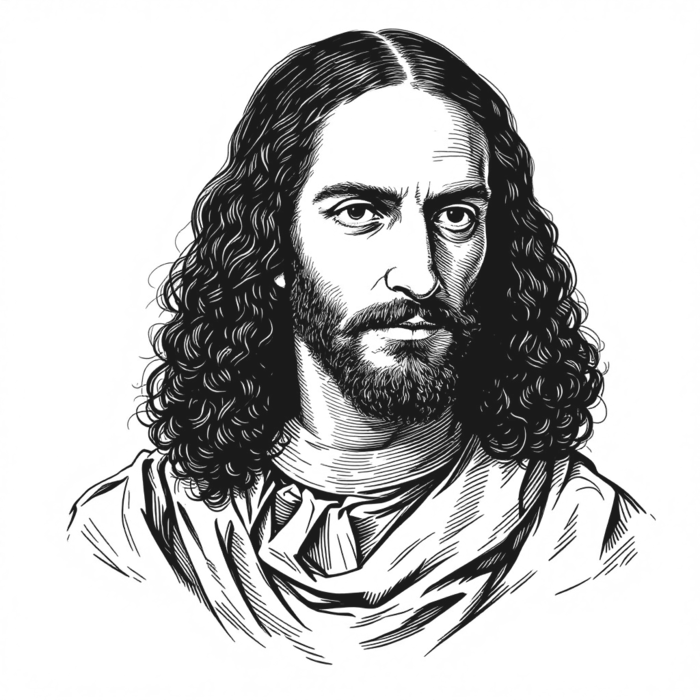
Baruch Spinoza

Baruch Spinoza

Baruch Spinoza (1632–1677) was a Dutch philosopher of Portuguese-Jewish origin who is considered one of the great rationalists of seventeenth-century philosophy. Born in Amsterdam to a family of Sephardic Jews who had fled the Portuguese Inquisition, he was excommunicated from the Jewish community at age 23 for his heterodox views. He earned his living as a lens grinder while developing one of the most ambitious philosophical works ever written. His masterpiece, the Ethics, Demonstrated in Geometrical Order, presented a radical metaphysical system in which God and Nature are identified as one and the same infinite substance. This pantheistic vision eliminated the traditional distinction between creator and creation. Spinoza argued that everything in the universe follows necessarily from the nature of this single substance, leaving no room for free will in the traditional sense. He held that human freedom lies in understanding the necessity of things through reason, which transforms passive emotions into active understanding. His political philosophy championed democracy, freedom of thought, and the separation of philosophy from theology.